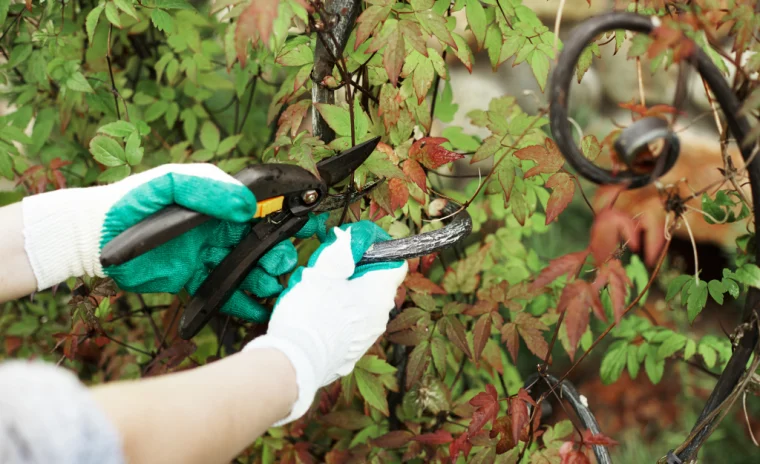
What Is Pruning?
Before diving into how to prune a tree, let’s answer a basic question, what is pruning?
Pruning is the careful removal of selected tree branches to improve structure, health, and safety. It is not random cutting. It is planned to be trimmed with a clear goal.
Pruning trees can help:
- Remove dead or diseased limbs
- Improve airflow and sunlight
- Support strong branch structure
- Reduce storm damage risk
- Maintain an attractive shape
Pruning is different from removing a tree entirely. If a tree is dead, unstable, or causing major damage, you may need our Tree Removal Services. But many trees simply need proper trimming to thrive.
Why Pruning Trees Is Important
Pruning trees is about more than appearance. It protects your property and saves money over time.
Prevents Disease Spread
Dead or infected limbs can spread decay. Removing them early helps protect the rest of the tree. For ongoing monitoring, our Tree Care Services include plant health care and tree health assessment.
Reduces Safety Risks
Weak or hanging branches can fall during storms. In coastal areas like Mount Pleasant, strong winds are common. If you are unsure about structural stability, a Tree Risk Assessment can identify potential hazards.
Supports Healthy Growth
Selective pruning tree branches allows the tree to direct energy where it is needed most.
Protects Your Home
Branches touching roofs or power lines can cause costly repairs. Regular trimming lowers that risk.
When to Prune Trees
A common question is, when to prune trees for the healthiest results?
For most species, the ideal time is late winter or early spring when trees are dormant. There are fewer leaves, which makes the structure easier to see.
Dormant pruning:
- Reduces stress
- Limits pest activity
- Encourages strong spring growth
However, dead or damaged branches should be removed right away, no matter the season.
If a storm has caused sudden damage, our Emergency Tree Services can safely remove hazardous limbs and debris.
Tools You Need for Pruning Trees
Before learning how to prune a tree properly, gather the right tools.
Basic tools include:
- Hand pruners for small branches
- Loppers for medium limbs
- A pruning saw for thicker branches
- Safety gloves
- Eye protection
- A sturdy ladder
Clean, sharp tools create smooth cuts. Smooth cuts heal faster and reduce the chance of disease.
For high branches or heavy limbs, it is safer to work with trained arborist services rather than attempting risky cuts yourself.
How to Prune a Tree Step by Step
Now let’s break down how to prune a tree in a clear, manageable way.
Step 1. Inspect the Tree
Walk around the tree. Look for:
- Dead branches
- Cracks or splits
- Crossing limbs
- Signs of disease
- Weak branch angles
Planning is key. Never start cutting without knowing your goal.
Step 2. Remove the 3 D’s
Start by removing:
Cut back to the branch collar, the slightly raised area where the branch meets the trunk. Do not cut flush against the trunk and do not leave long stubs.
This is the foundation of any solid tree pruning guide.
Step 3. Address Crossing Branches
When pruning tree branches, remove limbs that rub against each other. Rubbing causes wounds, and wounds invite pests and decay.
Keep the stronger branch. Remove the weaker one.
Step 4. Shape with Care
When shaping, remember this rule. Never remove more than 25 percent of the canopy in one season.
Avoid topping the tree. Topping creates weak regrowth and structural issues.
Instead, thin selectively. Allow light and air to move through the canopy while preserving the natural form.
If the tree is large or mature, local tree services can help maintain structure safely.
Step 5. Use the Three-Cut Method
For thick branches, use the three-cut method to prevent bark tearing.
- Make a small cut underneath the branch, about 12 inches from the trunk.
- Make a second cut from the top, slightly farther out, until the branch falls.
- Make a final clean cut at the branch collar.
This method protects the trunk and supports healthy healing.
How Do I Prune a Tree Without Causing Harm?
Many homeowners ask, how do I prune a tree correctly without stressing it?
Follow these principles:
- Do not over-prune
- Avoid cutting into the trunk
- Do not leave stubs
- Disinfect tools if disease is present
- Stick to proper timing
If you are unsure about internal decay, root stability, or structural weakness, a certified tree risk assessment can guide your decision.
Common Mistakes When Pruning Trees
Even simple mistakes can lead to long-term damage.
Over-Pruning
Removing too much foliage reduces the tree’s ability to produce food.
Poor Timing
While late winter is often the best time to prune trees, certain flowering species require different timing.
Unsafe Practices
Climbing high ladders or cutting large limbs without training increases injury risk.
If pruning feels overwhelming, working with a trusted tree care company can help protect both you and your property.
Long-Term Benefits of Proper Pruning
Understanding how to prune a tree properly can reduce future costs and prevent major problems.
Consistent tree maintenance services:
- Reduce storm damage
- Lower the need for urgent tree removal
- Improve structural strength
- Support healthy root systems
- Maintain property value
Healthy trees are less likely to require emergency tree removal or extensive repairs later.
Final Thoughts on How to Prune a Tree
Learning how to prune a tree is one of the most valuable skills a homeowner can develop. When you understand what is pruning, know when to prune trees, and follow a clear tree pruning guide, you set your landscape up for long-term success.
Take your time. Use the right tools. Remove dead or damaged limbs first. Avoid over-cutting. If you ever feel unsure about how to prune a tree safely, it is wise to consult trained arborist services rather than risk injury or structural damage.
At New Leaf Tree Service in Mount Pleasant, SC, we have provided reliable tree services since 2012. Our owner, ISA Certified Arborist Jessica Pares, is present on every job to maintain quality and safety. We are fully licensed and insured, and we carry both general liability and worker’s compensation coverage to protect our residential and commercial clients. Whether you need help pruning trees, ongoing plant health care, stump grinding, or professional tree removal, we make the process simple and stress-free. Call (843) 640-7767 today for your Free Estimate and let us help care for your trees the right way.